Meditation Posture
Most meditation techniques require us to be still for prolonged periods of time. While stillness of the body is not necessary (see Meditation in Motion), it is usually helpful for calming and focusing the mind. We will highlight some guidelines about posture here, but everyone’s body is different, and not everyone experiences posture in the same way. Therefore, it is important to find a posture that works for you.
Balance — Comfort vs Alertness
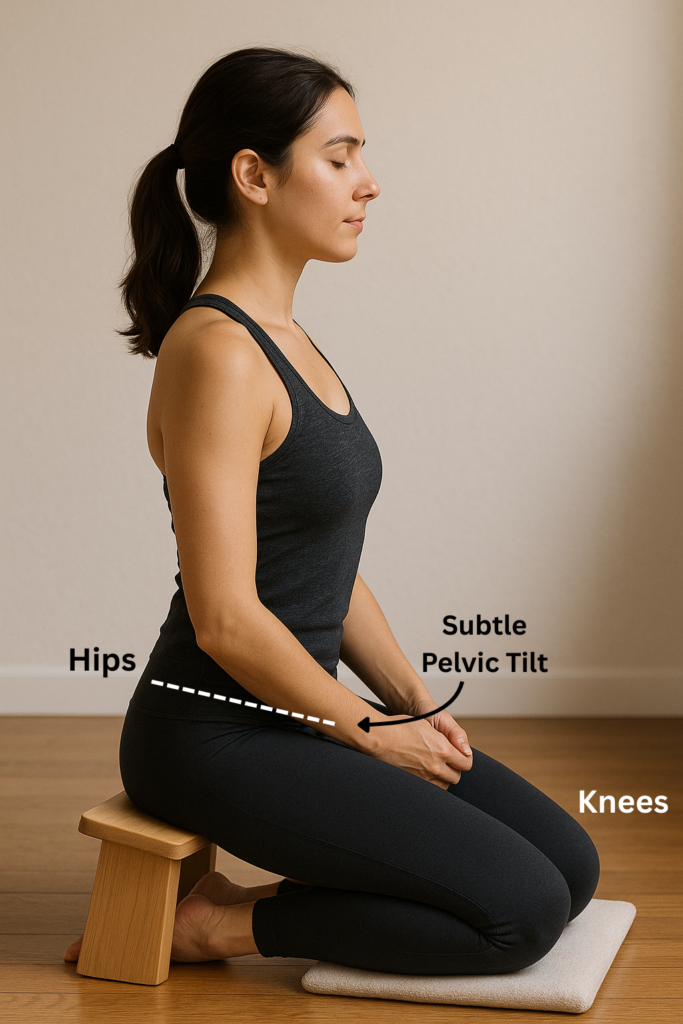
Perhaps the most important variable in meditation posture is the balance between comfort and alertness. If you are too comfortable, your mind will go dull and you might fall asleep. This happens most often when lying down or sitting reclined with the back fully supported. On the other hand, if you sit very upright, perfectly straight, with a stiff back, you will be very uncomfortable, making it difficult to concentrate and let go. With too much discomfort, you might end your sit earlier than planned or spend the whole time fidgeting and adjusting your body. Therefore, striking the right balance between these two extremes is crucial. Fittingly, the sweet spot is typically found in a seated posture that physically balances the body — not leaning too far forward or back — with minimal effort.
Most people find the best postural balance when their hips are below their knees, ensuring a slight forward tilt of the pelvis. This allows the spine to stay upright in a naturally aligned, relaxed way, requiring just a small amount of effort to maintain.
Tools for Sitting
In order to sit with comfortable balance, it is usually necessary to sit on a cushion, bench or chair:
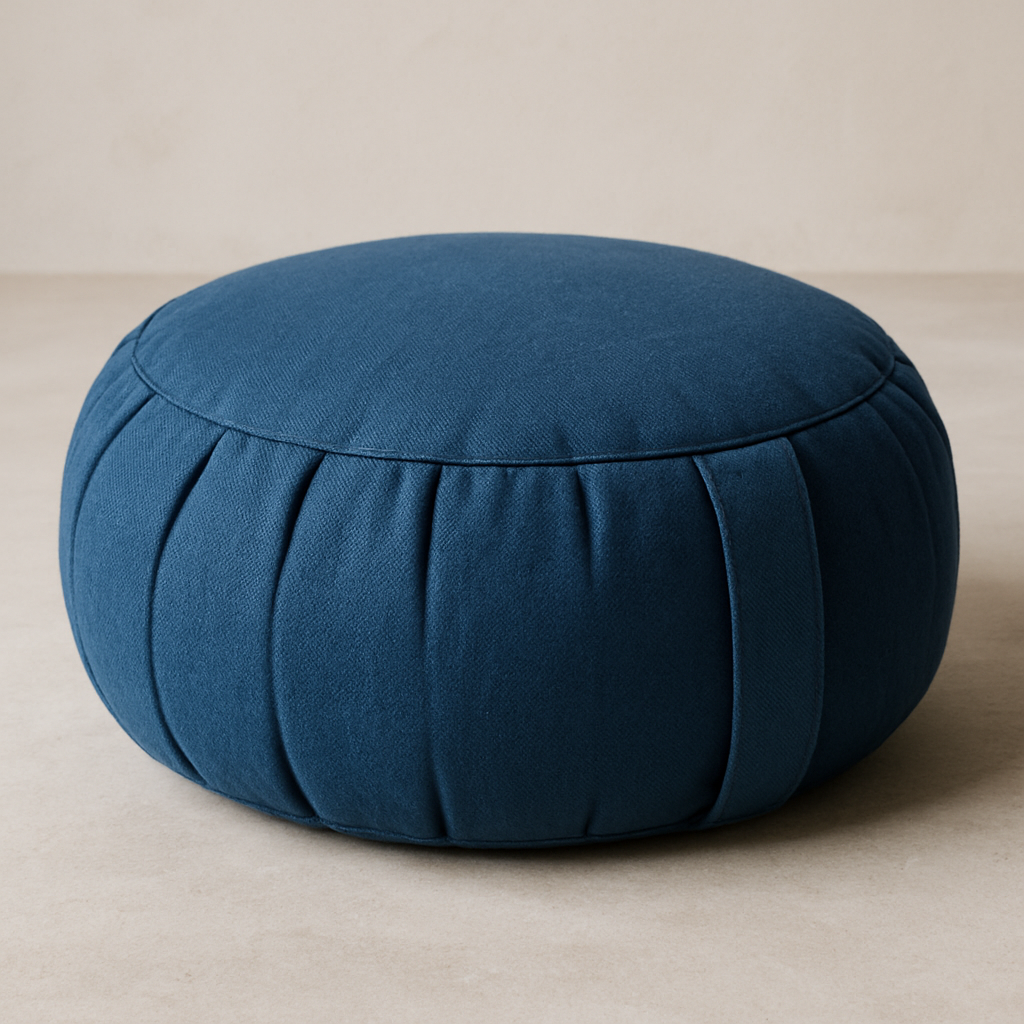
Cushion
- Great for cross-legged and kneeling positions
- Flexible shape
- Softness/material options available
- Most comfortable on a mat or carpeted floor
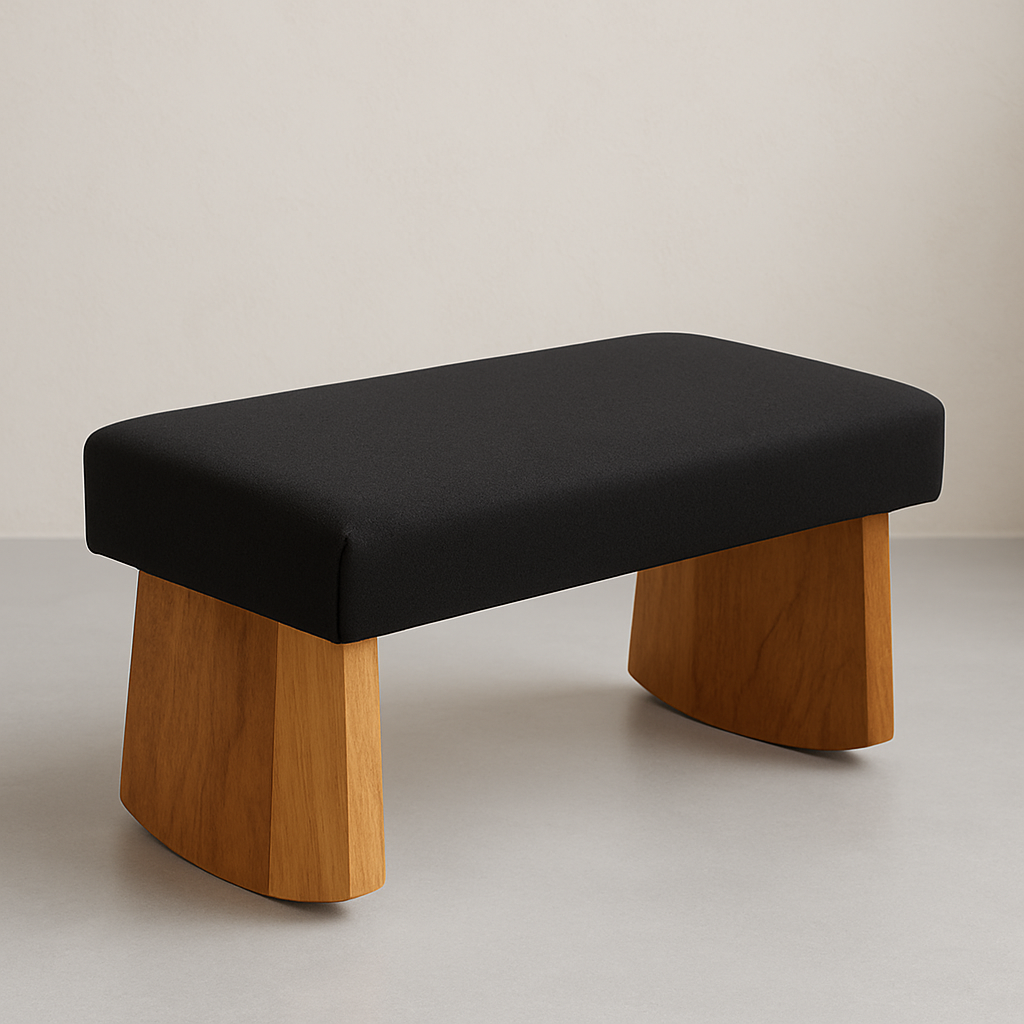
Bench
- Ideal for seiza (kneeling) position
- Very stable
- Comfortable if padded sufficiently
- Most comfortable on a mat or carpeted floor
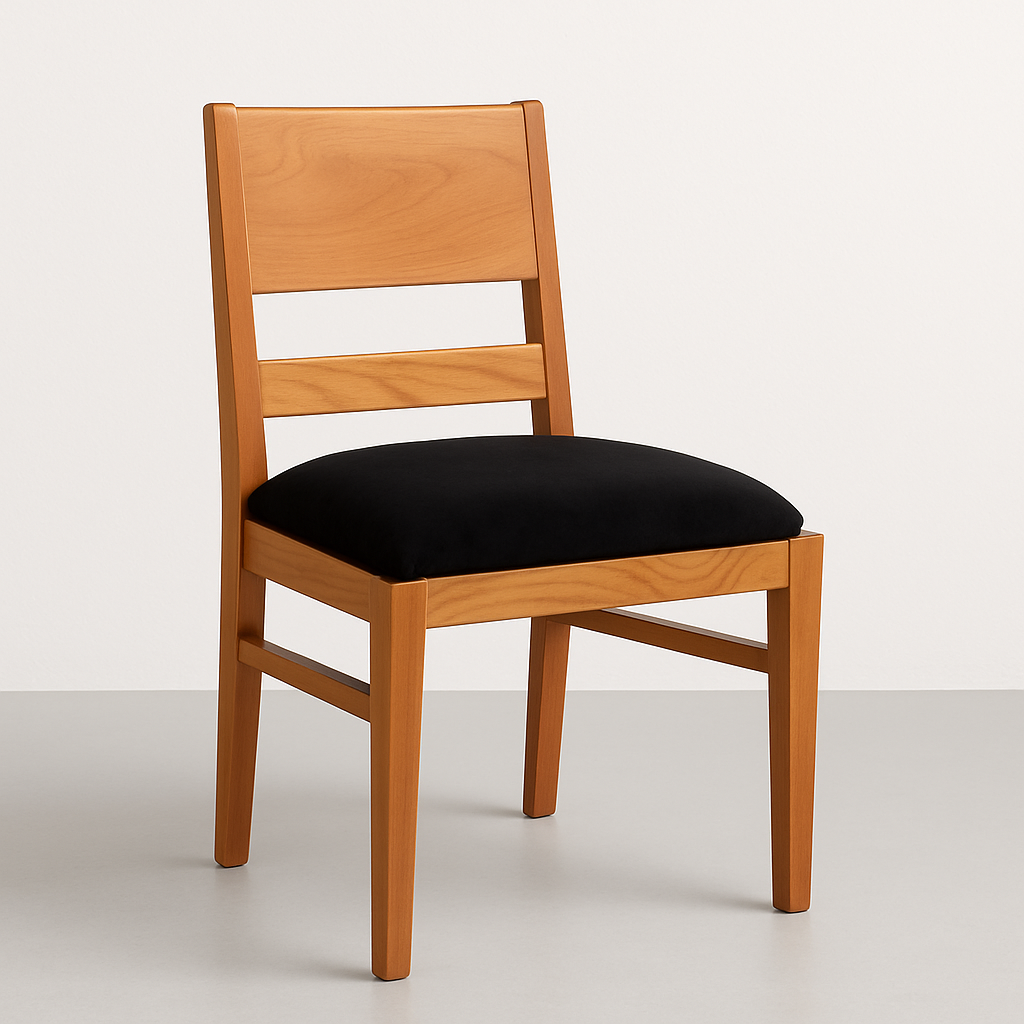
Chair
- Convenient and totally viable, especially for those with mobility limitations or sensitive backs
- Best done with minimal use of the back rest
- Many chair meditators add a cushion to elevate hips
Common Meditation Postures
Criss-Cross Applesauce
Tool: Cushion
The classic cross-legged position many people learn as children. Sitting on a cushion can raise the hips and reduce strain, though the ankles or lower legs may become uncomfortable over time due to one leg resting on the other.
Burmese Position
Tool: Cushion
A cross-legged position where both knees and feet rest on the floor, with one foot placed in front of the opposite shin rather than stacked on top. This posture is generally more stable and comfortable than criss-cross sitting, but it requires slightly more hip flexibility.
Half / Full Lotus
Tool: Cushion
These traditional cross-legged postures involve placing one or both feet on top of the opposite thigh. While often associated with meditation imagery, they require significant hip and knee flexibility and are not necessary — or advisable — for most practitioners.
Seiza Pose
Tool: Bench (or cushion)
A kneeling posture where the shins rest on the floor and the weight is supported by a bench or cushion between the legs. Seiza is very stable and upright, making it a good option for people who find cross-legged sitting uncomfortable.
Chair Sitting
Tool: Chair
A highly accessible option where the feet rest flat on the floor and the spine remains upright without leaning back. Chair sitting can be just as effective as floor postures when alignment and alertness are maintained.
Lying Down
Tool: None (floor or bed)
Meditating while lying down can be useful for rest or body-based practices, especially when sitting is uncomfortable. However, it tends to encourage sleep and is generally better suited for relaxation than for cultivating alert awareness.